
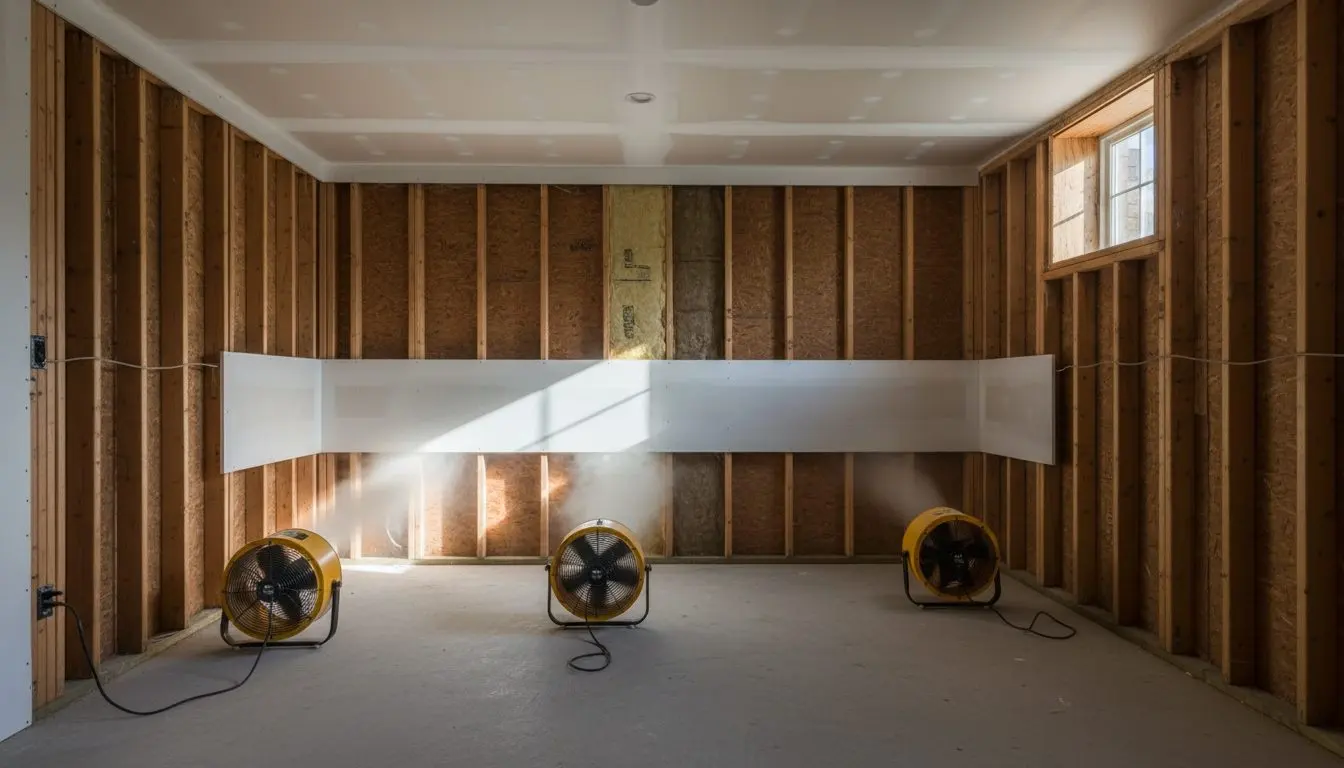
Water Damage Repair in Harrisburg
Drying out and rebuilding after water, from a burst pipe to a flooded basement
Somebody out within a day or two, wet material cut back above the highest reading, and nothing closed up until a meter says the framing behind it is dry.
What happens after the water has been stopped
You end up with a wall that stays dry, no smell in the room, and no line showing where the water got to.
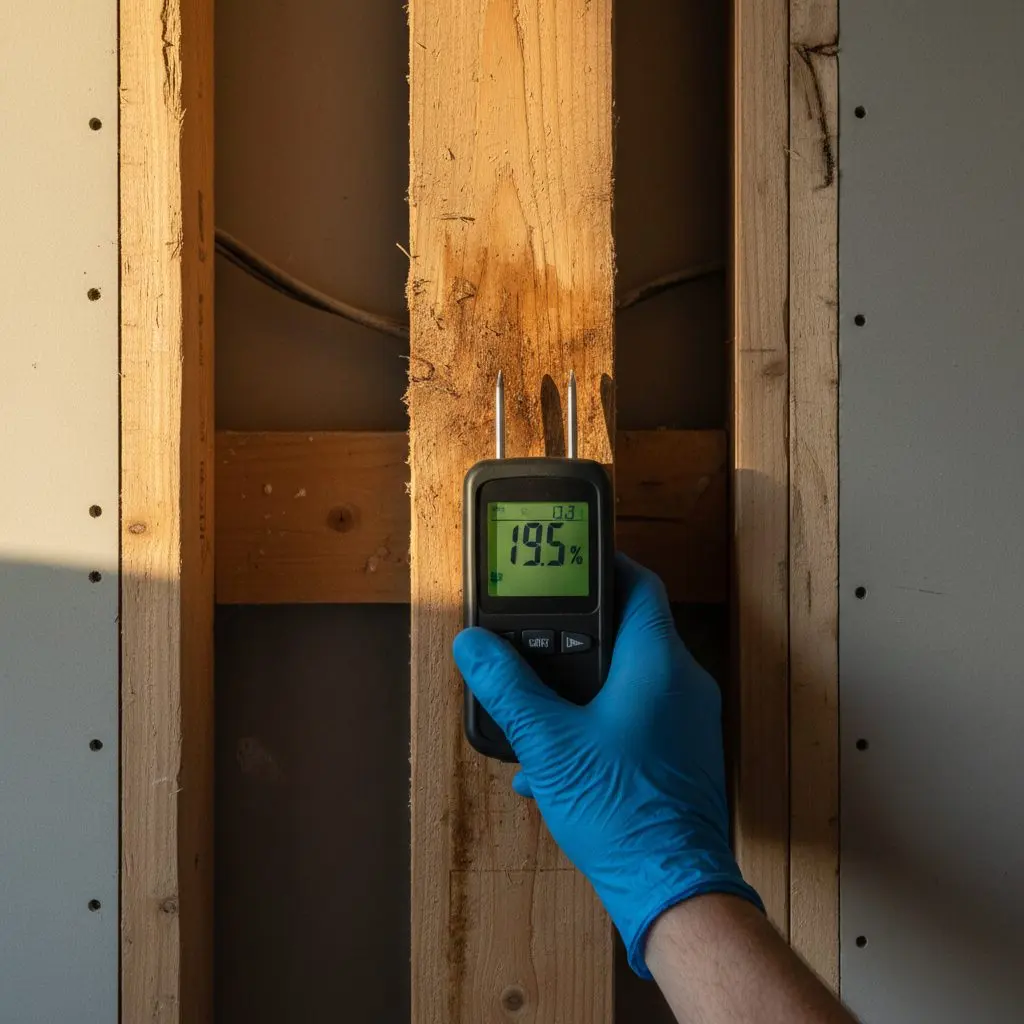
This is what happens after the water has been stopped. Flooded basements, burst pipes, a bath or a washer that has run through a floor, ice dam staining on upstairs ceilings, and the mold that follows any of them. Stopping the water itself is a plumber or a roofer and we will say which. If the wall is dry and only the surface is marked, that is drywall repair.
Around forty water jobs a year. The spring ones cluster in the same low streets near the river and the January ones are pipes in unheated corners.
The calls are flooded basements after the river or a failed sump, split pipes in a cold January, a bath or a washing machine that has run through a floor, ice dam staining on upstairs ceilings, and mold found behind board after any of them. Wet board is cut back to a foot above the highest wet reading rather than to the visible tide line, and the cavity is dried and metered before anything is closed, because framing shut up damp grows mold behind a brand new wall.
A homeowner in Shipoke with eighteen inches of river water through the ground floor, and a landlord in Camp Hill whose upstairs bathroom has run through into the kitchen ceiling.
Send a photograph of the damage or ask for a free damp check at (717) 555-0164. You will go from opening that door to see whether it still smells to shutting it and forgetting about it!
What comes out, what dries and what goes back
The wet part taken out, the cavity dried, and the wall built back.
- Wet board and insulation cut out and taken away
- Cavities dried and metered before closing
- Flood cuts made above the highest wet reading
- Ceilings opened where water tracked along joists
- Mold-resistant board on the bottom course
- Baseboard, bead and taping patched after
- Dated photographs and readings for your insurer
Dry it and patch it, or cut it out and start again
Not everything that has been wet has to come out, and a meter settles that rather than an opinion.
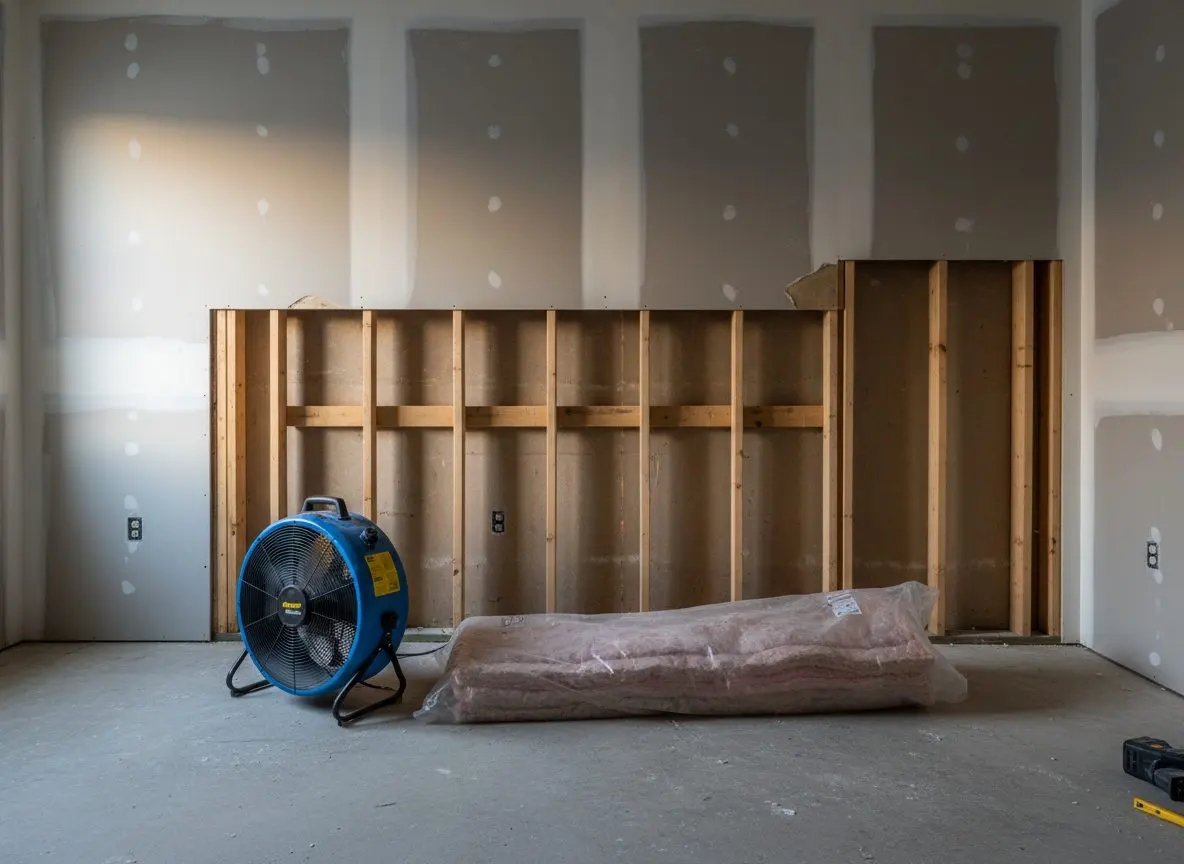
Board that got damp and was dried within a day or two is usually sound. If it is firm to a knuckle, the seams have not swelled, and the meter reads dry through the cavity behind it, it stays, and the room is dried out and repainted. Clean water from a supply pipe is the case where this happens most often.
It comes out when the board is soft or crumbling, when the paper face has lifted, when the insulation behind it is wet, or when the water came from a drain, a sewer or the river. Board wicks upward well past the tide line, so a wall that seems fine at knee height can be holding water two feet above it.
We take readings on the visit and say which it is, including when the answer is that most of it can stay. A meter and half an hour settle it, and the readings go on the quote where an adjuster can see them. Where one wall has to come out and three can be dried, that is how the quote is written.
Sixteen percent, and how we know we are there
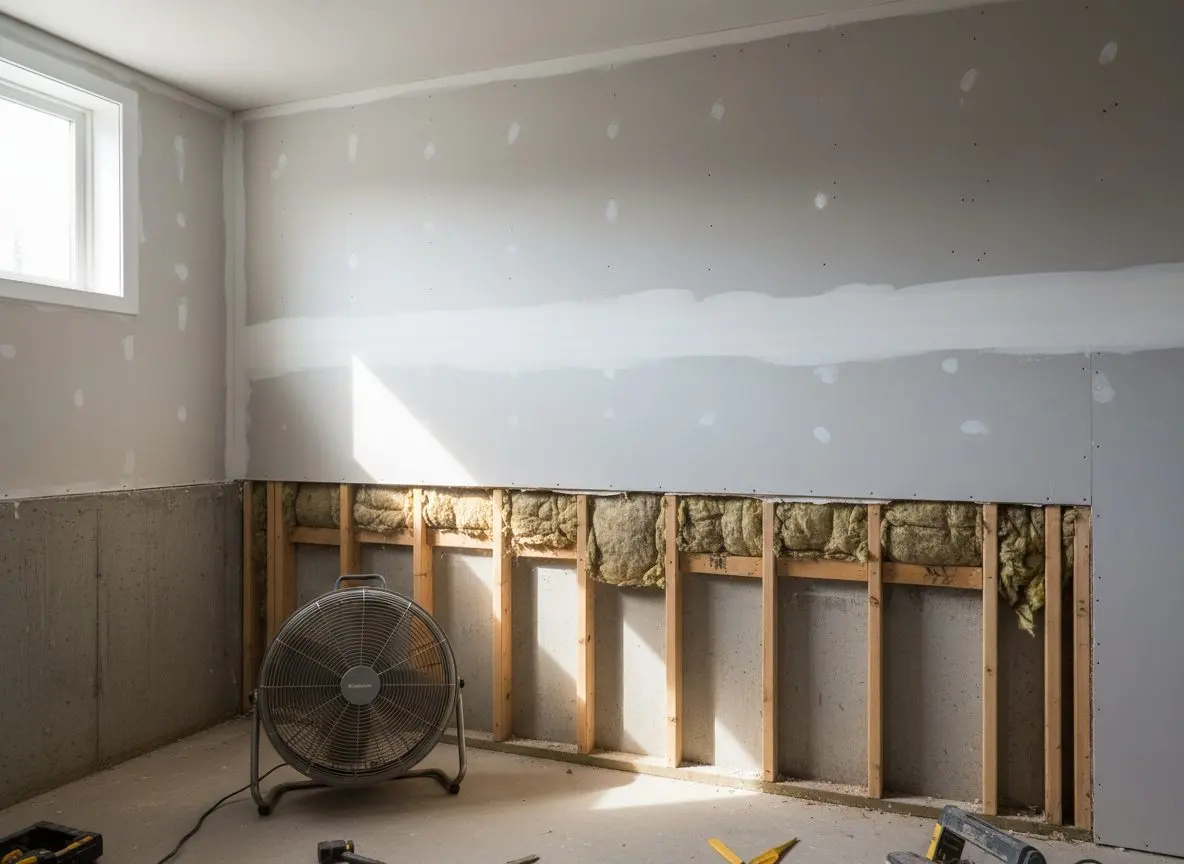
Cut a foot above the highest wet reading, dried to a meter, mold-resistant board back on the bottom course.
Wet board is cut back to at least twelve inches above the highest moisture reading rather than to the visible line, because gypsum wicks water upward past anything you can see. Wet fiberglass insulation comes out; mineral wool and foam are metered before anybody decides.
Cavities are dried with air moving through them and checked with a pin meter, and nothing is closed until the framing reads under sixteen percent, which is the threshold mold needs to take hold.
Drying follows the principles set out in ANSI/IICRC S500. Mold-resistant board to ASTM C1396 goes back on the bottom course, held half an inch clear of the floor, and the joints are paper-taped and finished to Level 4.
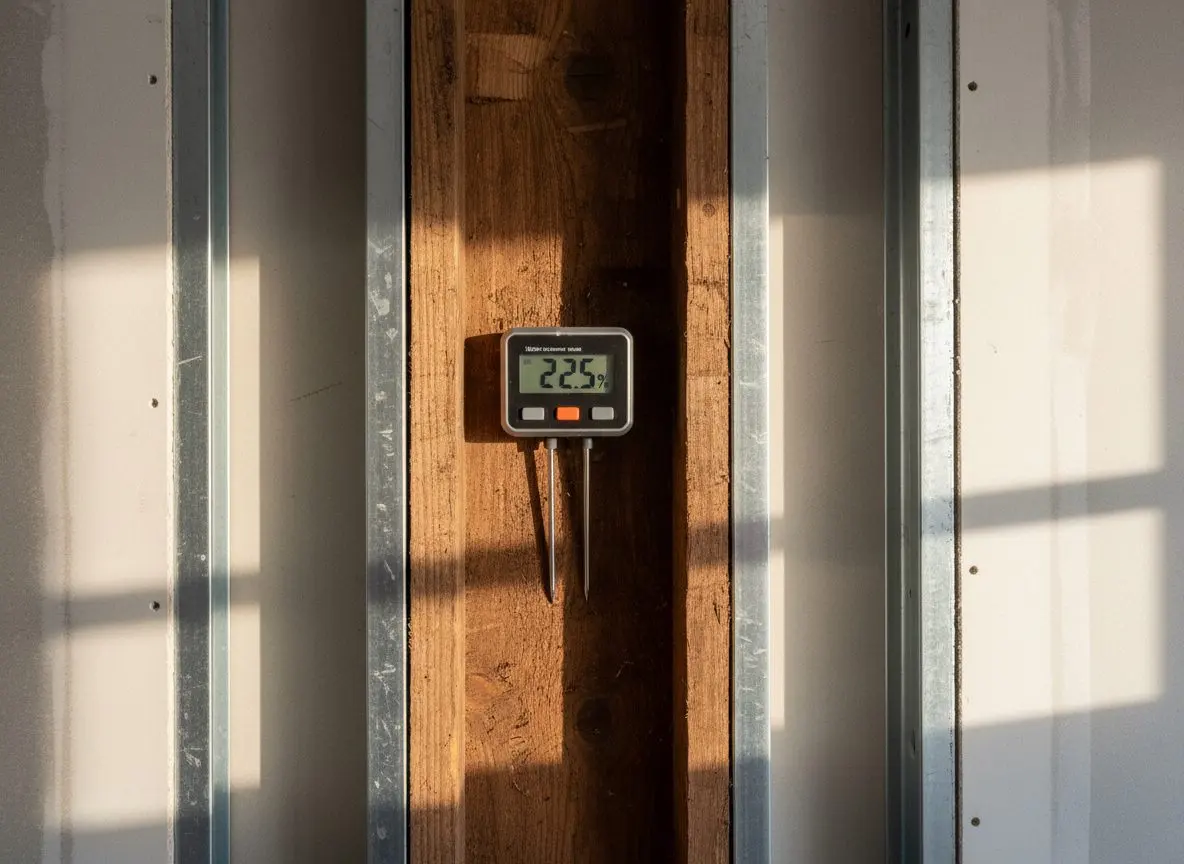
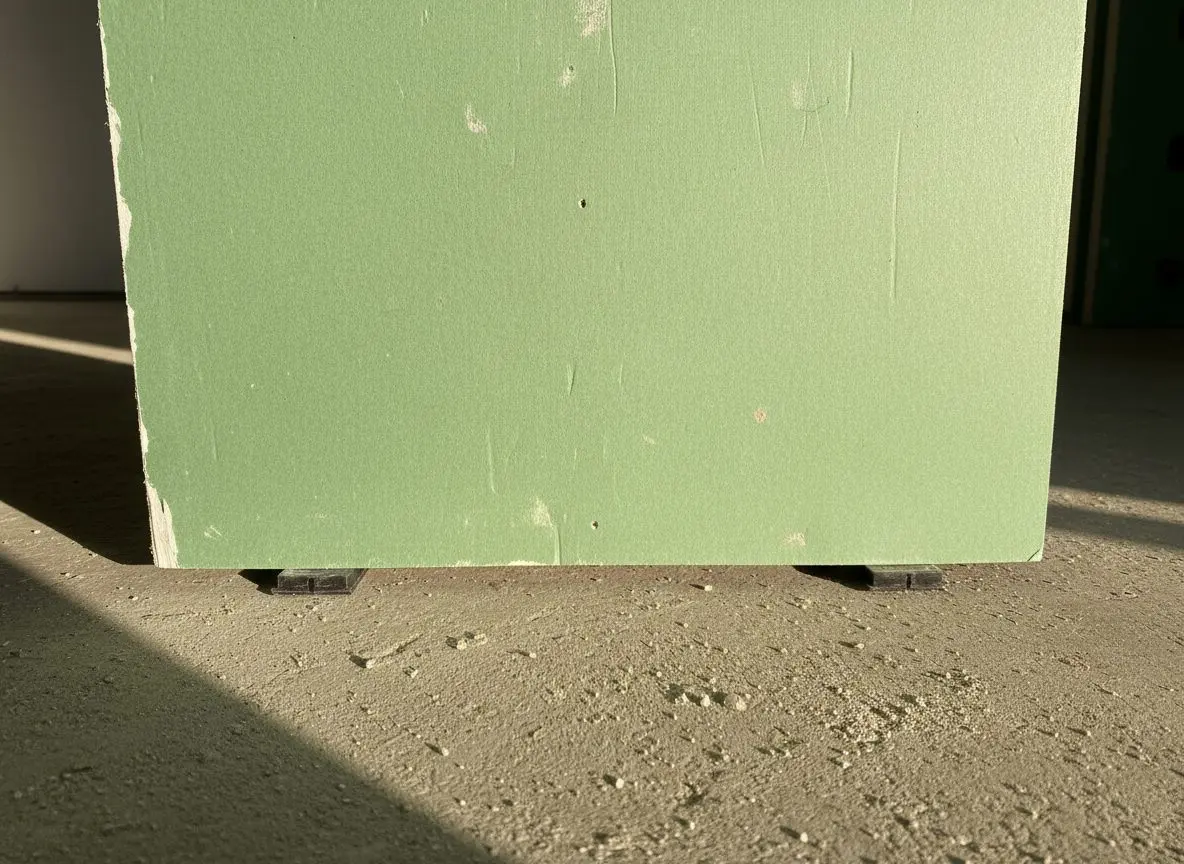
- Flood cut a foot above the highest reading
- Framing metered under 16 percent before closing
- Wet fiberglass insulation removed, not dried
- Drying to ANSI/IICRC S500 principles
- Mold-resistant board to ASTM C1396
- Bottom edge held half an inch off the floor
Call and somebody will come and look at the wall, say which of these your job actually needs, and put the answer in writing.
(717) 555-0164What moves the price of a water damage job
Two rooms with the same tide mark price very differently, because what costs money is how far the water traveled, how long it sat there, and what it soaked into on the way.
- How long it was wet
- Water found in a day is a drying job. Water that sat behind a wall for two weeks has swollen the board, rusted the fixings and started mold in the cavity, and none of that can be dried back out of it.
- Where the water came from
- Clean supply water is the simple case. Drain water, sewage and river water bring contamination with them, so more material comes out on principle and the cavity is cleaned rather than only dried.
- How far it traveled
- Water runs along joists and under floors and shows itself a long way from where it started. A ceiling stain in one room can mean opening a floor in the room above, and that is found with a meter, not by eye.
- What is inside the wall
- Wet fiberglass has to come out and be replaced. Wiring, pipework and a finished basement's framing all add time, and a wall with cabinets or a staircase against it has to be taken apart before it can be opened.
- Drying time on site
- Equipment running in an open room for three to seven days is normal, and cold or humid weather stretches it. Those are days the room is out of use, and closing early to save them is what causes the second job.
- How much has to be rebuilt
- A two-foot flood cut along one wall is a day's hanging. A whole basement stripped back to the block, or a ceiling and the floor above it, is a rebuild, and the quote keeps drying separate from building back.
What your job carries is settled with a meter on the first visit, and the readings that decided it go on the quote. Get a free quote
Six steps between your call and a finished room
Three to five days on site for a typical room, and the loud, dusty half of it is finished in the first two.
Call and we will book the look, usually inside the same week, so you know what the job involves before you commit to it.
Get a free quoteThe invisible parts that stop a second job
Water damage is the one thing in a house that gets more expensive every day it is left.
No published figure prices this. Remodeling Magazine's Cost vs. Value report covers whole projects for the Middle Atlantic region and has never carried water damage repair, because it is a repair rather than an improvement and nobody chooses to buy it.
What decides whether the money holds is what got done while the wall was open. A cut made above the wet reading rather than the tide line, insulation replaced instead of dried in place, a cavity metered before it was closed, and a bottom edge held clear of the floor are all invisible afterwards.
They are also the difference between a wall that is finished and a wall that gets opened again in two years.

The Susquehanna, a January freeze and a February thaw
The Susquehanna reaches the low streets most springs, January splits pipes in unheated corners, and ice dams put roof water through upstairs ceilings in February.
- Shipoke floods from below, not from above
- River water comes up through the lowest floor and stands there, a different job from a leak. It arrives with silt and contamination, so board, insulation and baseboard come out on principle rather than after a reading, and the cut is made high.
- Pipes split in January and run in February
- The damage here is done by the thaw rather than the freeze. A pipe in an outside wall or unheated crawlspace splits while frozen and stays shut, then runs when the weather turns, so a burst is usually found as a stain rather than a noise.
- Ice dams put the water in above the ceiling
- Snow melts over a warm roof, freezes again at the cold eaves and backs water up under the shingles. It arrives in the room below as a ring on the ceiling weeks after the snow has gone, and the wet insulation above it is always wider than the stain.
Rooms dried out after the river and after the thaw
Six water jobs finished in the last year, with the town each one was in and where the water had actually got to.
-
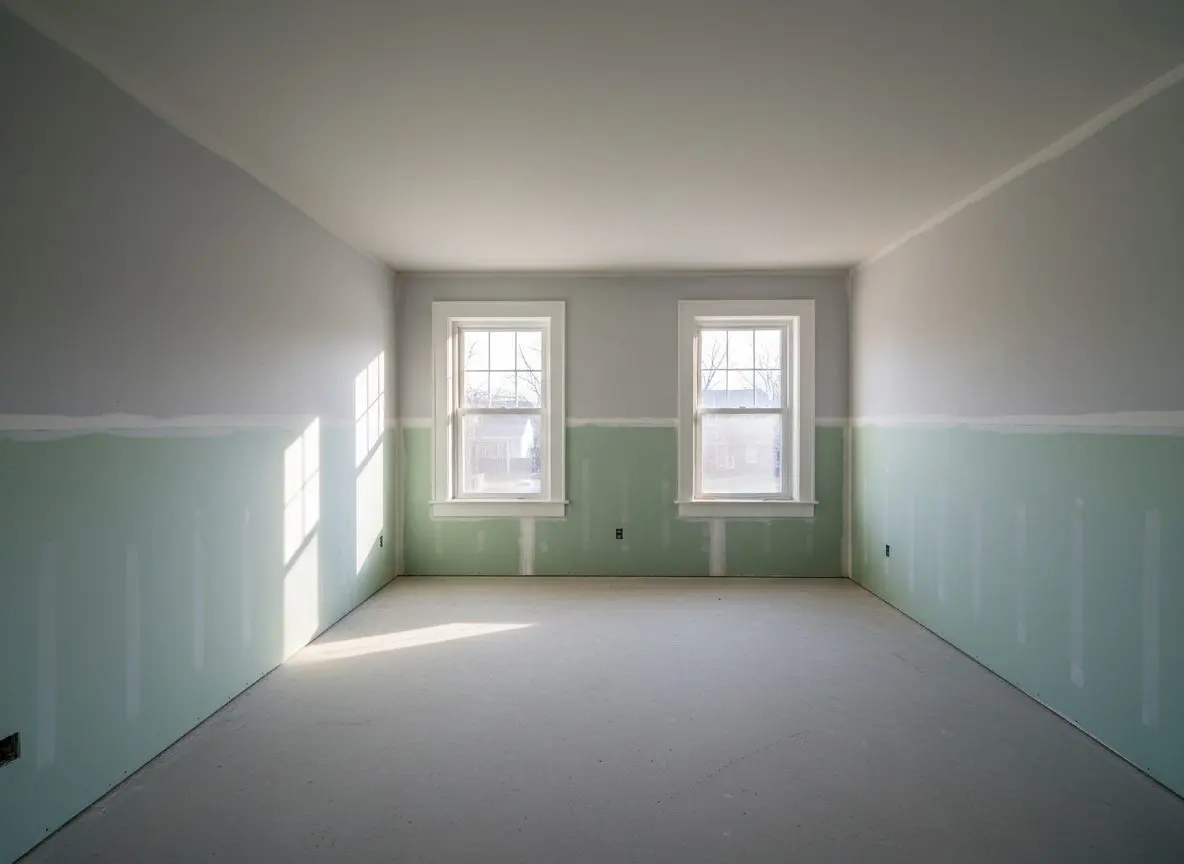
Ground floor stripped after a flood
Shipoke
Twenty inches of river water. Board and insulation out to four feet, cavities dried for eight days, then rehung in mold-resistant sheet.
-
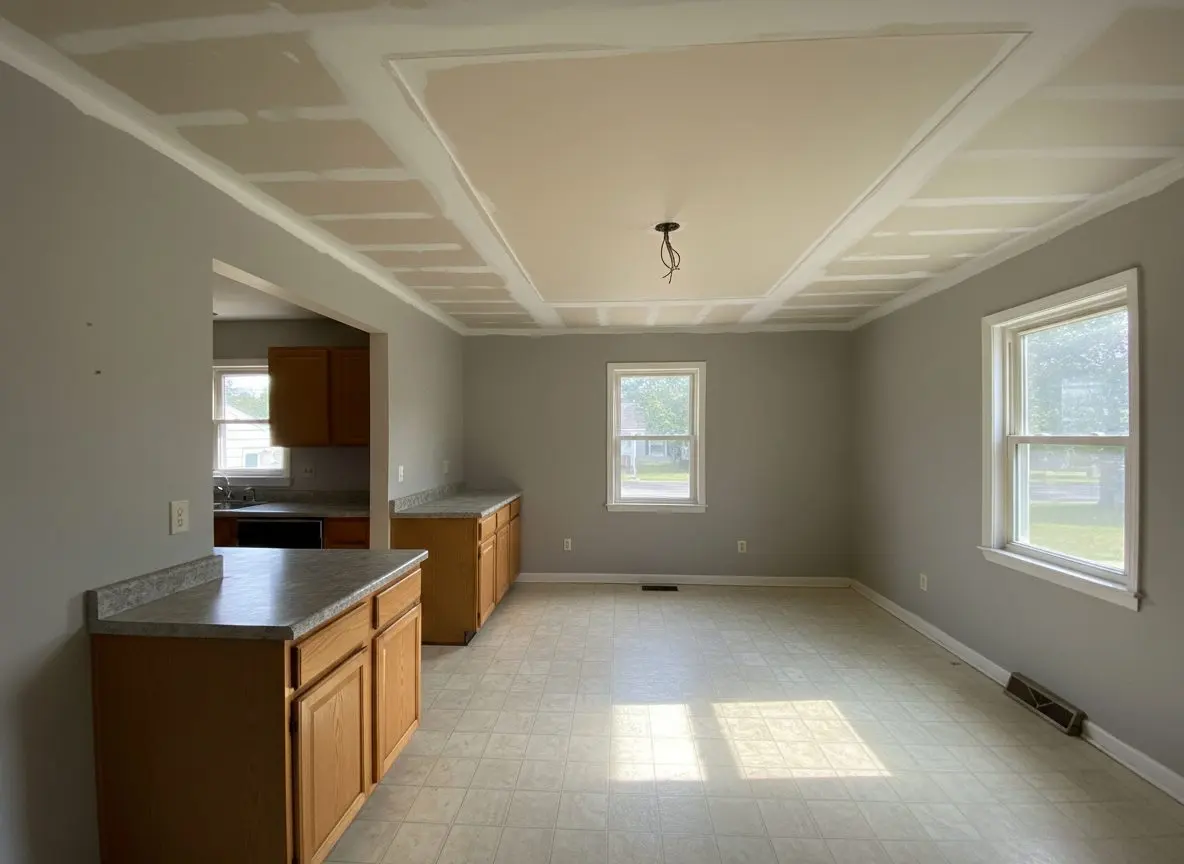
Kitchen ceiling after a burst pipe
Camp Hill
A supply pipe split in an outside wall upstairs. The ceiling was opened along two joists, dried and metered, then rehung and skimmed flat.
-
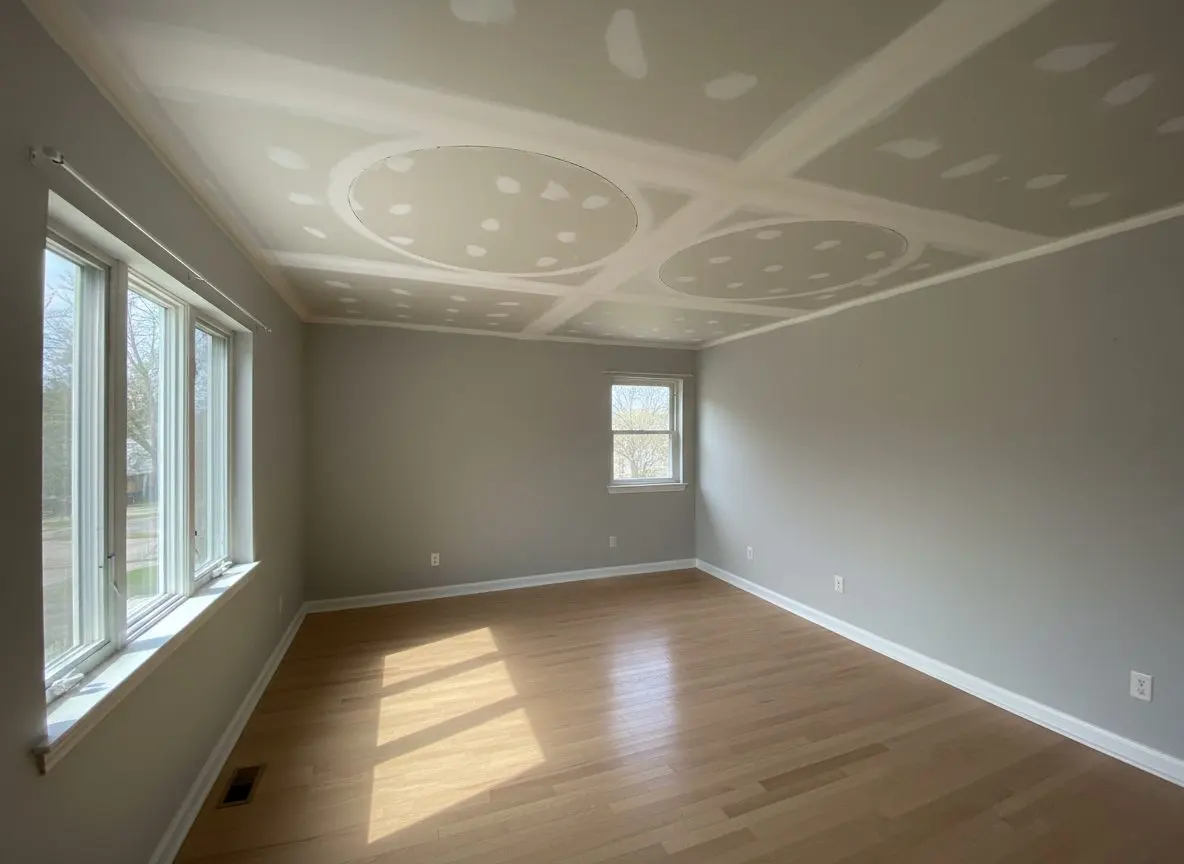
Ice dam staining put right
Bellevue Park
Two bedroom ceilings ringed after a February thaw. Wet insulation out, ceilings cut back, dried and metered before new board went up.
-
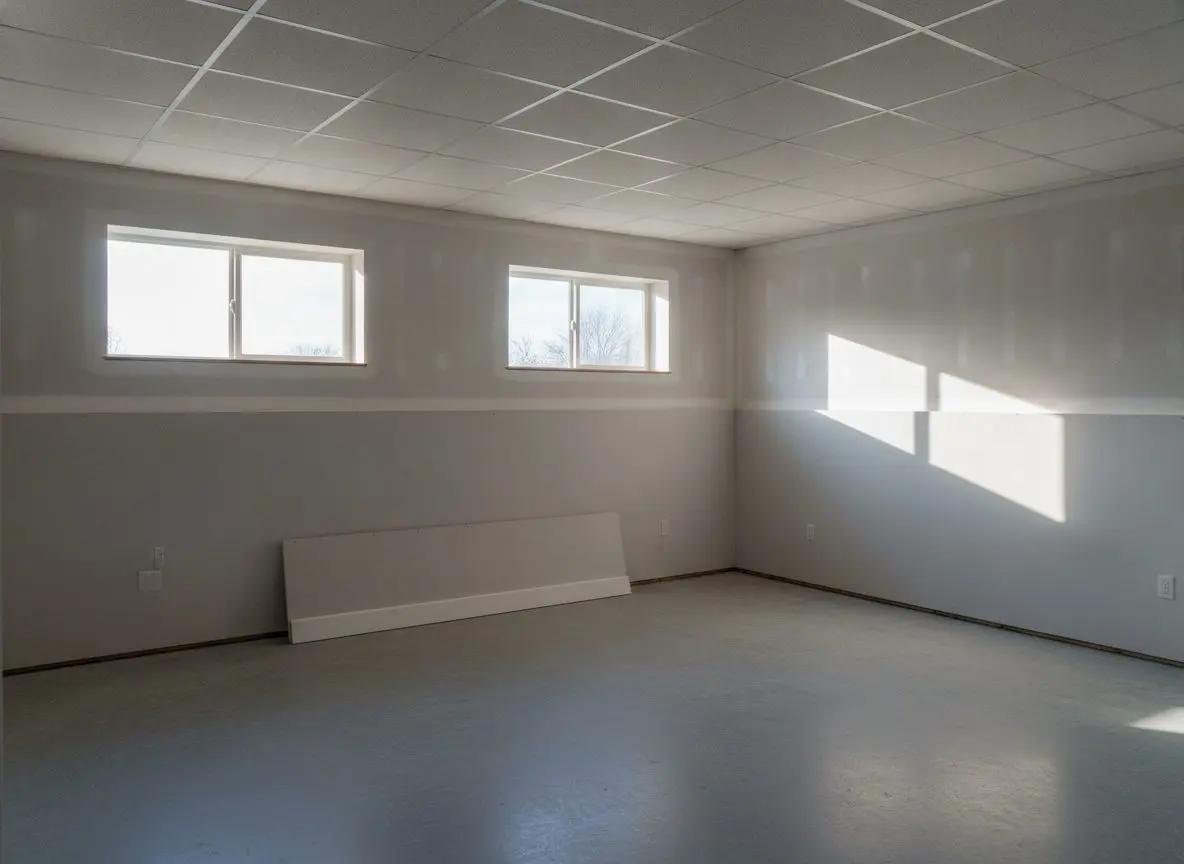
Basement rebuilt to flood better
New Cumberland
A family room flooded twice in five years. Rebuilt with paperless board low down, a bottom edge clear of the slab and a removable baseboard.
-
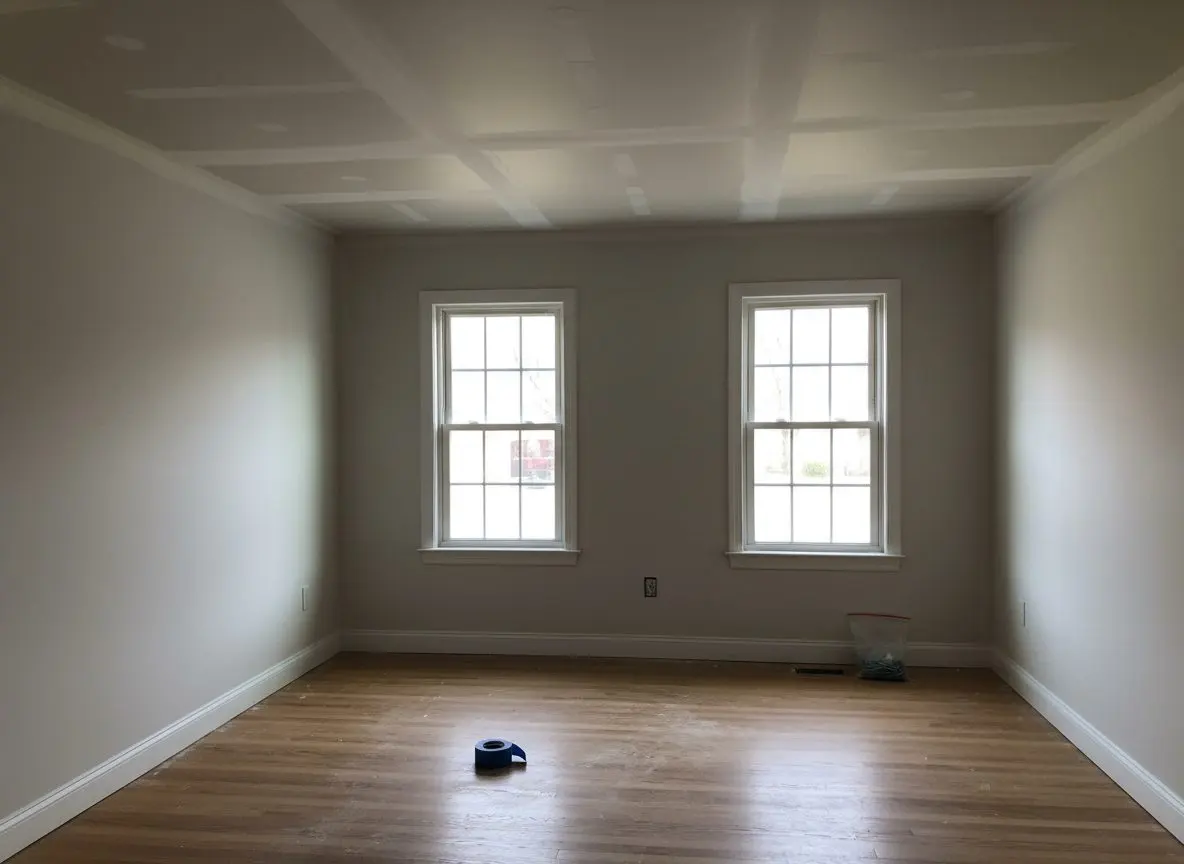
Washer overflow through two floors
Middletown
Water tracked from a laundry into the apartment below. Both ceilings opened, joists dried and metered, then hung and taped to Level 4.
-
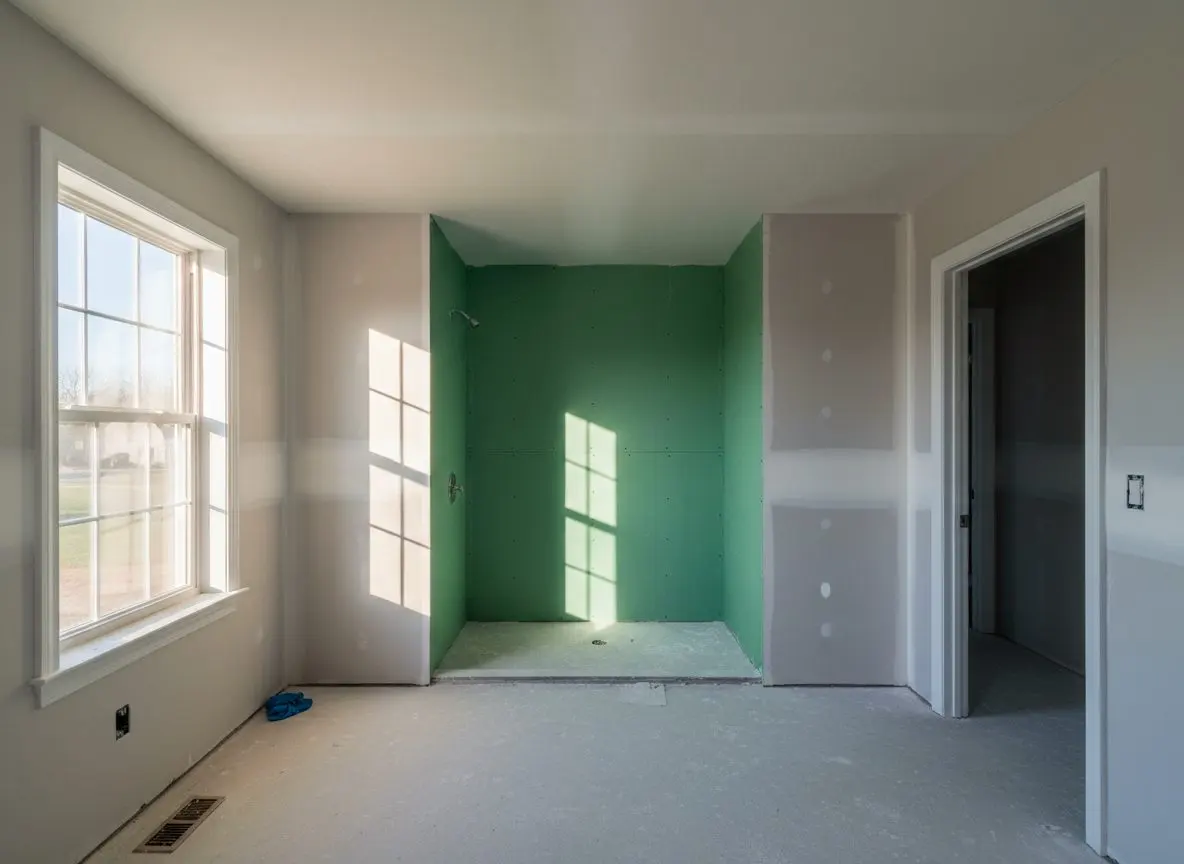
Shower wall opened and dried
Mechanicsburg
A slow leak behind a shower, found with a meter. Studs cleaned and dried out, mold-resistant board back, and the tiler handed a flat wall.
What people said after the room dried out
-
Rated 5 out of 5
Tenant moved out and left four holes and a kicked-in closet door. Patched, matched and primed in a day and a half. I had the keys back on the Thursday.
Warren S. Enola Drywall Repair -
Rated 5 out of 5
A plumber cut a two foot strip out of our kitchen ceiling to reach a leaking supply line and left it open. They hung new board and matched the texture, and I cannot find the line from the table now.
Alanna F. Hummelstown Ceilings -
Rated 5 out of 5
Water came up through the basement floor after the August storm and I thought it was a mop and a fan job. They cut the board back higher than I wanted and ran the fans four extra days. No smell since.
Terri D. Linglestown Water Damage Repair
Call and ask for a couple of addresses near you where we finished a job this year.
Get a free quoteFAQs
Frequently asked questions
Questions people ask after water damage
How quickly can somebody get here?
Same day for the phone call and usually within a day or two for the visit, because we hold slack in the diary for water. Speed matters more here than on any other job we do, since the difference between board that can be dried and board that has to come out is often a matter of days.
Do I need a restoration company as well as you?
Sometimes, and we will say so rather than take the job either way. Standing water, a whole floor soaked or anything involving sewage wants a firm with pumps and industrial drying gear first. Once the water is out and the structure is drying, the cutting back, the board and the finish are ours.
Will my insurance pay for this?
That is between you and your insurer, and it usually turns on what caused it rather than on the damage. What we can do is give you the evidence, which means dated photographs before anything is cut, meter readings, and a quote itemized room by room in the detail an adjuster expects.
Can you just paint over the stain?
A stain-blocking primer will hide a dry mark, and that is a reasonable answer where the leak is fixed and the meter reads dry. Where anything behind it is still wet it is a waste of a day, because the mark comes straight back through and the board carries on softening out of sight.
How do I know if there is mold behind the wall?
Usually by smell before anything else, and then by meter. A musty room with no visible mark is the classic sign of a wet cavity. We cut a small inspection hole low down, look and take a reading, and that is a ten minute job rather than a reason to open a whole wall.
Do you remove mold, or is that somebody else?
Mold on board that is coming out anyway leaves with the board, bagged, and the framing behind is cleaned and dried. Anything widespread, or mold that has got into the heating system, is licensed remediation work and belongs with a specialist. We will tell you which of the two you have rather than guess at it.
How long before I can put the room back together?
Reckon on three to seven days of drying with the wall open, then three to four days to board, tape, sand and prime. A cold or humid spell stretches the drying half. We will not shorten it by closing a wall that is still reading wet, because that is the one shortcut that costs you the job twice.
Does the drying equipment have to run day and night?
Yes, and it is noisy and it uses power, which is worth knowing before it starts. Fans and a dehumidifier run continuously for several days, doors stay shut on the room and the machines get checked and moved as the readings change. Switching them off overnight adds days rather than saving anything.
My basement floods most springs. Is there any point?
There is, and it changes what we build rather than whether we build. Paperless board on the lower courses, a bottom edge held clear of the slab, a removable baseboard and no fiberglass low down all mean the next flood costs you a wash down and a length of trim instead of a wall and a week.
Do you take the wet carpet and furniture out as well?
We take out the building material, so board, insulation, baseboard and trim leave with us. Carpet, contents and anything upholstered are not ours and are usually the insurer's business anyway, though we will say plainly what should go before we start rather than drywalling a room around it.
Can you deal with my adjuster directly?
Yes, and it saves everybody two weeks. We send the photographs, the meter readings and an itemized quote in the format adjusters expect, and we will talk to them about scope. What we will not do is change a quote to fit a settlement, because then the work does not get done properly.
What if it has been leaking slowly for years?
Then the damage is usually wider than it looks and the framing needs checking before anything else. Slow leaks rot rather than soak, so we open enough to find the edge of it, meter the timber, and tell you if a carpenter is needed before the wall can be closed. That is a bigger conversation than a burst pipe.
Harrisburg Drywall Pros
Flood and burst-pipe damage moves ahead of the ordinary line, no matter what else is booked.
Harrisburg Drywall Pros hangs, tapes, finishes and repairs board across Harrisburg and the river towns nearby, in rowhouses with plaster on lath as often as new construction. Three crews finish around a hundred and ninety jobs a year, and flood or burst-pipe damage is fitted in ahead of the ordinary line. Trading here since 2012.
Why the river towns call Harrisburg Drywall Pros first
- Fourteen years working the river towns, trading since 2012
- We sound the plaster and check the lath before putting a number on anything
- Flood and burst-pipe damage moves ahead of the ordinary line
- Freeze-thaw cracks are taped and bedded, not just filled over
- Nothing is added to the quote later without you agreeing to it first
If the river has left a stain on a lower wall, an old ceiling needs opening up, or a room needs drywall from scratch, call (717) 555-0164 and somebody will come and look at it. The written quote follows the visit, broken down room by room, and nothing gets added to it later without you agreeing first.
Give us a call
office@harrisburgdrywallpros.com
Send us a message
922 N 3rd St, Harrisburg, PA, 17102
Where to find us