
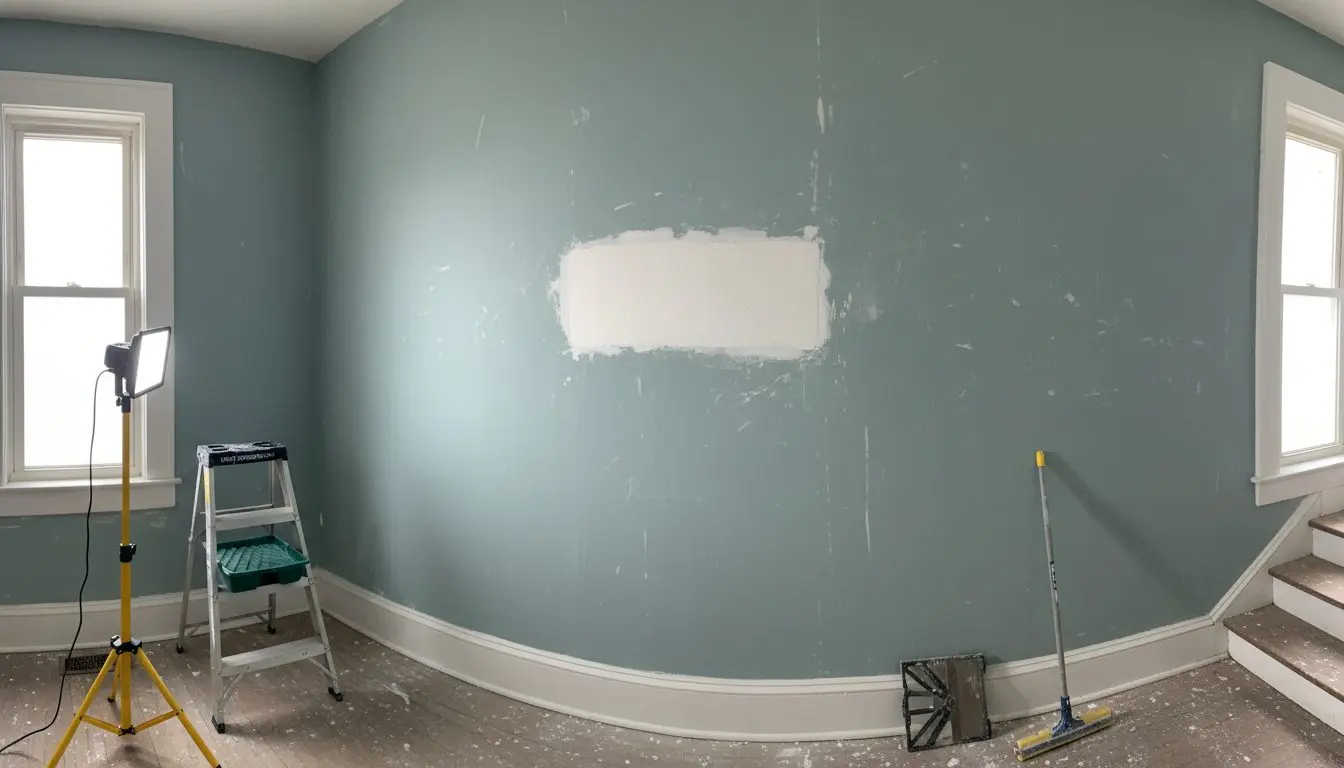
Drywall Repair in Harrisburg
Drywall and plaster repair, from a hairline crack to a whole wall
Same-week visits, damage cut back to solid material and screwed to framing, and the texture matched on a sample board before anything touches your wall.
Work on a wall or a ceiling that is already there
You end up unable to find the place it was, even standing in front of it trying to point it out.
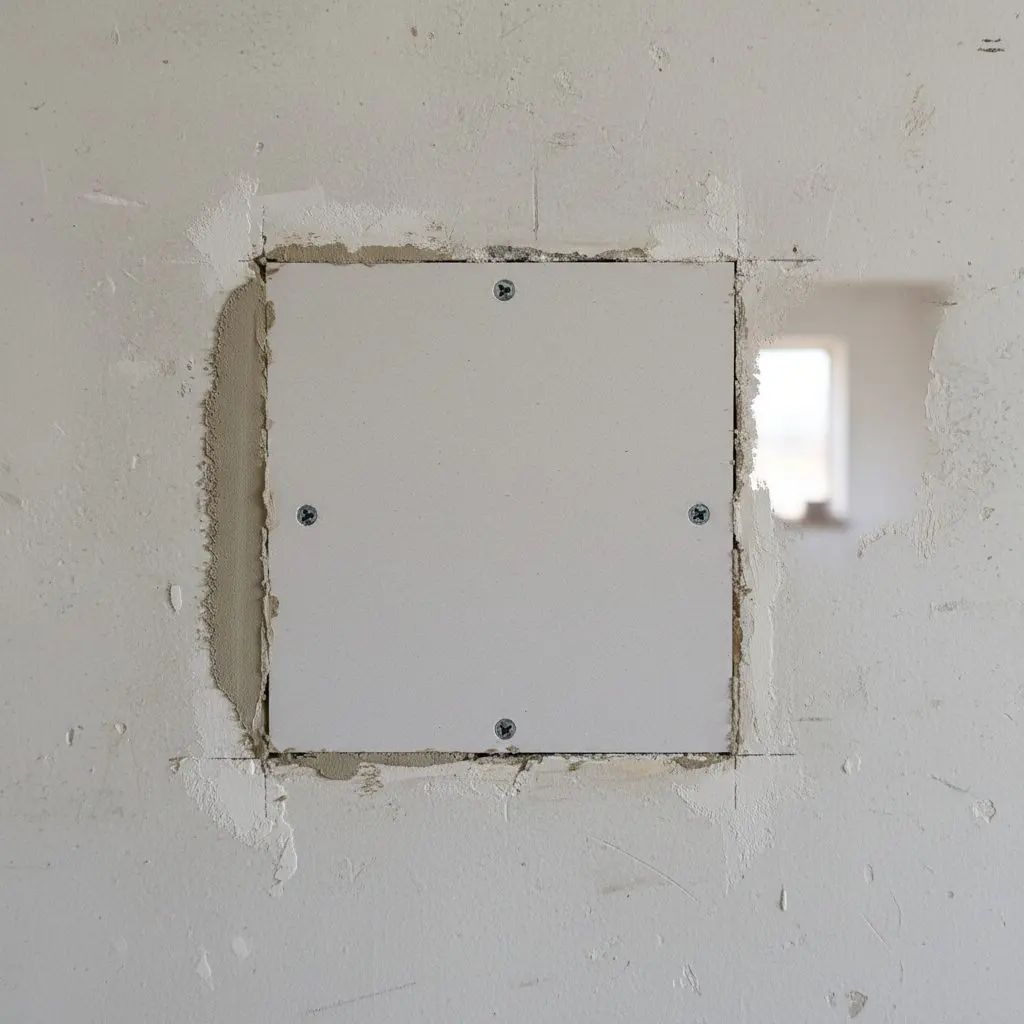
Repair is work on a wall or ceiling that is already there. Cracks, holes, popped screws, broken corners, sagging plaster and the damage left behind once a leak has been stopped. If a room is coming back to the studs anyway, that is drywall installation. If the material is still wet or the water is still arriving, start at water damage repair.
Close to eighty repair calls a year, and more than half of them are in rowhouses built before 1940 where the walls are plaster on wood lath.
Most calls are cracks at door heads and along ceiling lines, holes from doors, furniture and the occasional foot through a lid, popped screws showing across a whole wall, broken external corners, and plaster that has let go of the lath and is held up by the paint. Patches are cut square back to solid material and screwed to framing or to backing fitted behind the hole, never floated on tape alone, which is what stops the outline turning up through the paint the first time low sun comes round.
A homeowner in Bellevue Park with a stair wall that opens up every spring, and a property manager in Allison Hill who needs three apartments patched, matched and primed between tenants.
Send a photograph and ask what it takes, at (717) 555-0164. You will go from moving a picture across to cover it to forgetting the damage was ever there!
What a repair covers on plaster and on board
Small repairs done properly rather than filled and hoped over.
- Cracks at door heads, window corners and ceiling lines
- Holes from doors, furniture and a foot through a lid
- Popped screws and nail heads across a whole wall
- Broken external corners and damaged bead replaced
- Loose plaster reattached, or cut out and hung
- Texture matched on a sample, then the patch primed
- Room sheeted, vacuumed and put back before we leave
Patch the damage, or take the whole wall out
Most of what people describe on the phone as a wall problem is a patch and half a day.
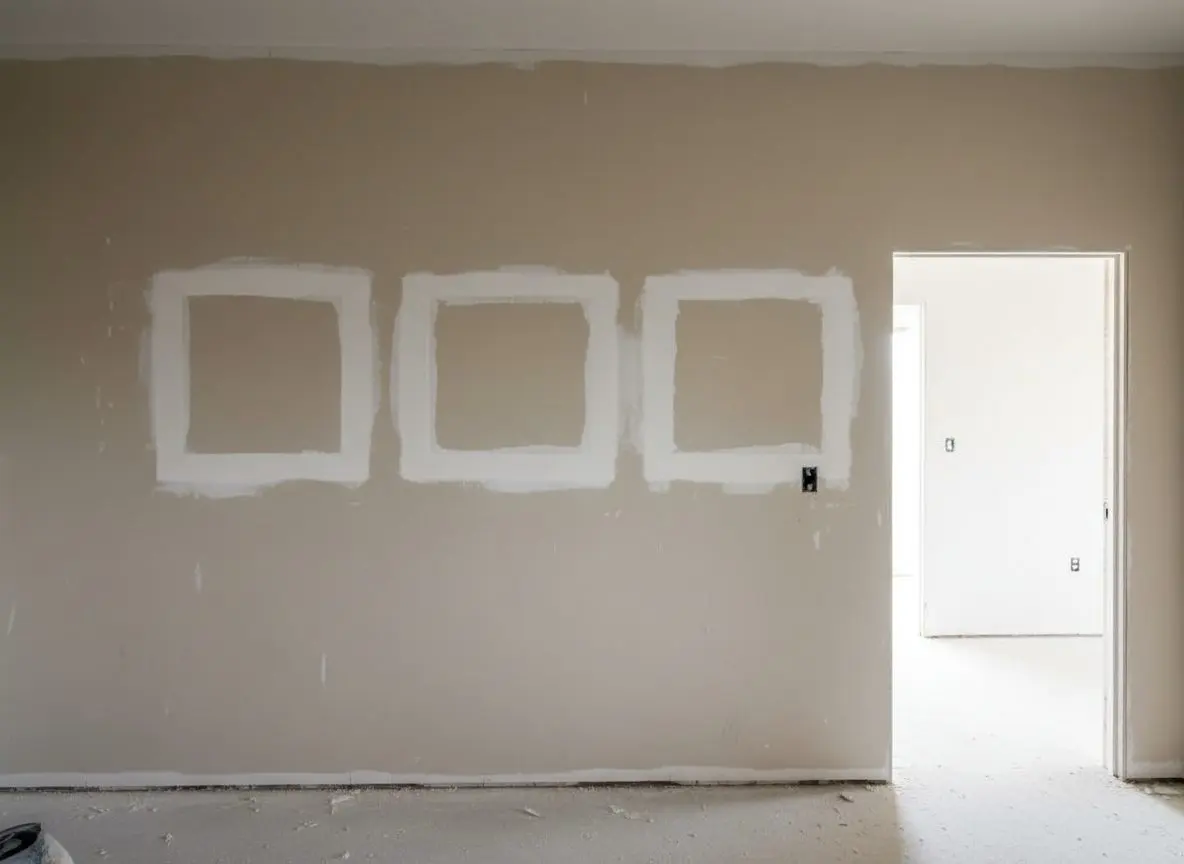
A patch is right when the damage has an edge you can find, when the material around it is firm to a knuckle, and when the surface either has no texture or has one that can be matched. Three holes and a run of popped screws in one room is still a patching job, and so is a crack that has stayed one width for years.
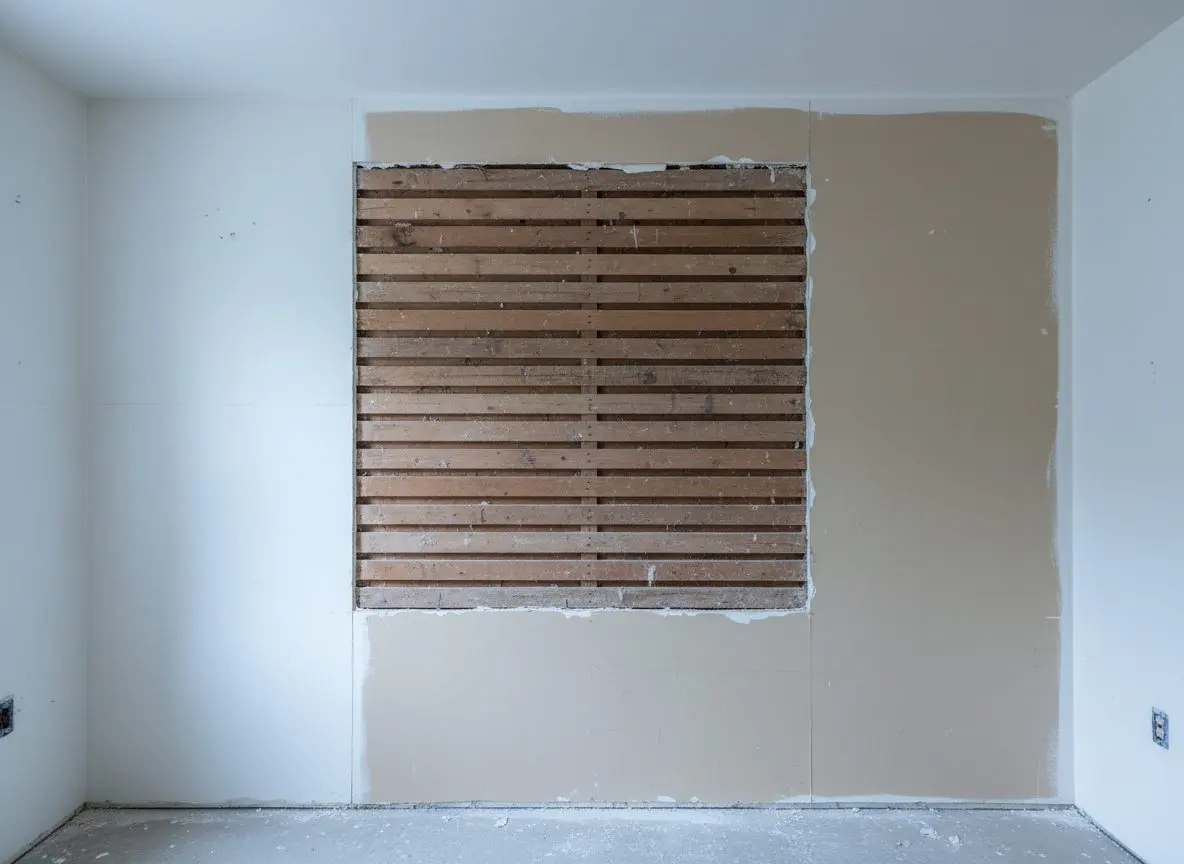
The wall comes out when the plaster has separated from the lath over a wide area, when a knuckle sounds hollow well beyond the damage, when the board has been wet, or when the same crack has been filled twice and come back. Patching a wall that has let go buys a season, and the repair widens each time.
We tell you which it is at the visit, including when it is the smaller job, and we would rather talk you out of a reboard than sell you one. Sounding a wall and pulling a screw takes minutes. If two walls can be patched and the third has to go, the quote will be written that way instead of pricing the room as one job.
What holds a patch up once the tape has dried
Patches cut square to solid material, screwed to framing or backing, paper-taped and feathered wide.
A repair is cut back with a square edge to material that is firm, then screwed either to framing or to backing fitted behind the opening. Nothing is left resting on tape alone.
Patch board is matched in thickness to what is already there, and where the old surface is three-coat plaster the board gets furred out so the two faces land in one plane. Joints are paper-taped rather than mesh, because mesh under a repair on a moving wall is what puts the crack back.
Three coats of compound go on, each feathered wider than the last, then the area is sanded and checked with a work light held flat to the wall before it is primed. Texture is matched on a sample board first.
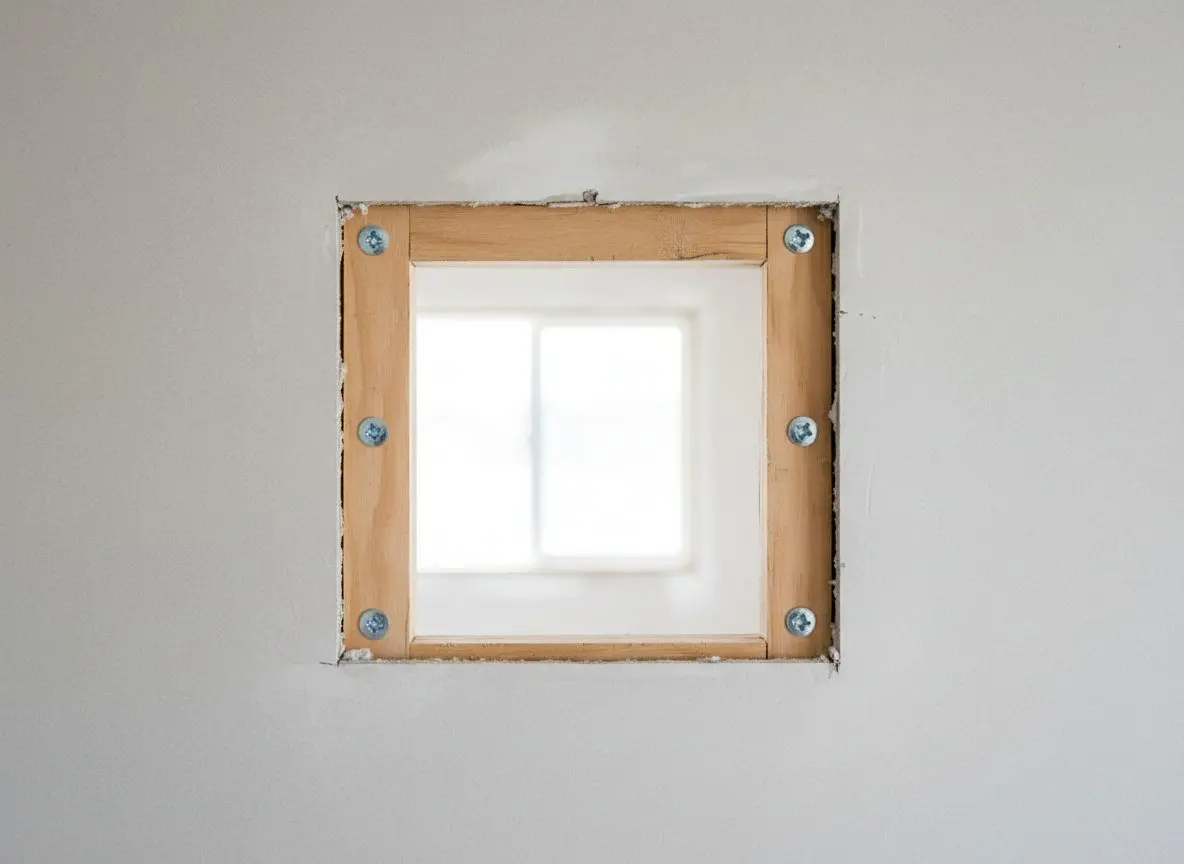
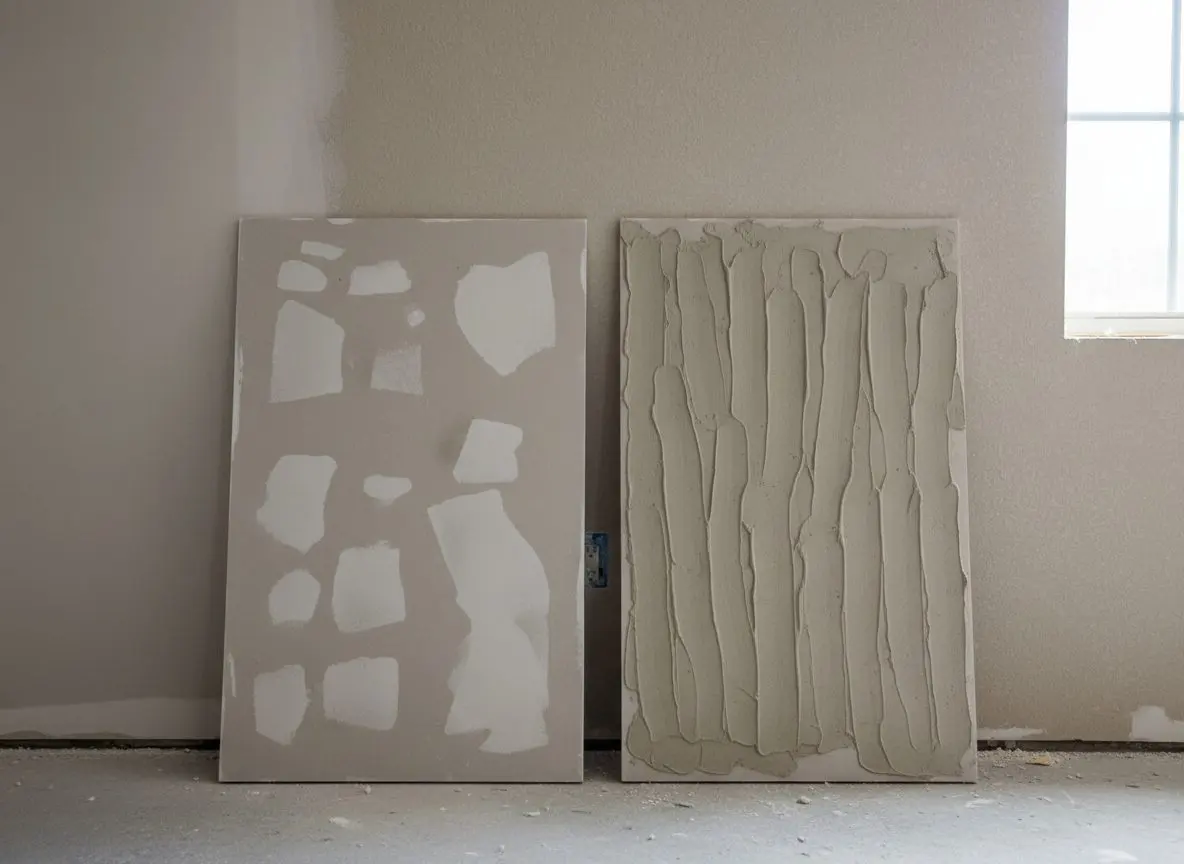
- Cut square, back to firm material
- Screwed to framing or added backing
- Paper tape on repairs, never mesh
- Patch board furred to meet old plaster
- Three coats, each feathered wider
- Texture matched on a sample first
Call and somebody will come and look at the wall, say which of these your job actually needs, and put the answer in writing.
(717) 555-0164What moves the price of a repair
Two holes the same size can be an hour apart in labor, because what decides a repair is what is behind it, what is on the surface, and how the light in that room falls on the wall.
- What is behind the damage
- A hole between two studs needs backing fitted before anything can be screwed to it. A hole over a stud does not. Plaster on lath is slower again, because the lath has to be cut and the depth made up.
- Surface texture
- A flat painted wall is the quick version. Knockdown, orange peel, sand swirl and old troweled plaster all need matching, which means samples, drying time and a second visit if the first try is not close.
- How the room is lit
- A repair in a dim hallway needs two coats. The same repair on a wall with a window down one side needs three, feathered much wider, because raking light finds any change in plane that flat light hides.
- Number of separate repairs
- Six small holes in one room cost far less each than one hole in six rooms. Setting up, sheeting, mixing and cleaning down happen once per room, so grouping the work is the cheapest thing you can do.
- Ceiling or wall
- An overhead patch takes longer at every stage and needs propping while it is fixed. Compound sags, sanding is done looking up, and the dust falls on everything, so the protection has to be more thorough.
- Whether painting is included
- We prime as standard. Painting out to a break line, or matching an old color across a whole wall, is more time and material, and on faded paint it can mean doing all four walls to avoid a newer square.
Which of these your repair carries is decided by looking at it, and the quote names the ones we found. Get a free quote
Six steps between your call and a finished room
Three to five days on site for a typical room, and the loud, dusty half of it is finished in the first two.
Call and we will book the look, usually inside the same week, so you know what the job involves before you commit to it.
Get a free quoteWhy a filled crack comes back on the viewing list
A wall nobody notices is worth more than a wall somebody has to explain.
No published figure covers this. Remodeling Magazine's Cost vs. Value report prices whole projects for the Middle Atlantic region, and a repair is not a project, so drywall patching has never appeared in it and nobody can honestly tell you a percentage.
What actually holds value is whether the repair was made at the cause or at the symptom. A crack cut out, taped and bedded stays shut, while the same crack filled stays a recurring line on a viewing checklist.
Plaster reattached where it is loose keeps the original wall; plaster patched only where it showed means the next owner finds a hollow panel with a knuckle.
Loose keys, spring cracks and damp off the river
Rowhouse walls here are plaster on lath and fail by letting go rather than cracking, freeze and thaw reopen the same joints each spring, and river damp works up from the baseboard.
- Plaster lets go before it looks broken
- In the Midtown and Uptown rowhouses the plaster keys snap off the lath long before anything shows on the surface, and the paint is holding a whole panel up. Sounding it finds the loose area, which is usually several times the size of the crack.
- The same cracks open every spring
- Freeze and thaw cycles here run into the dozens each winter and the framing moves with them. Cracks reappear at door heads, the top of stair walls and ceiling lines. Filling those is temporary; they must be cut out, taped and bedded to stay shut.
- Damage near the river starts low
- In Shipoke and the streets along the water, wall damage shows first as a soft band a foot or two off the floor rather than as a mark from above. That is wicking, not a leak, and a patch that does not start above the wicked line will be back.
Repairs made in rowhouses and out on the West Shore
Six repairs finished in the last year, with the town each one was in and what had to be matched or worked around.
-
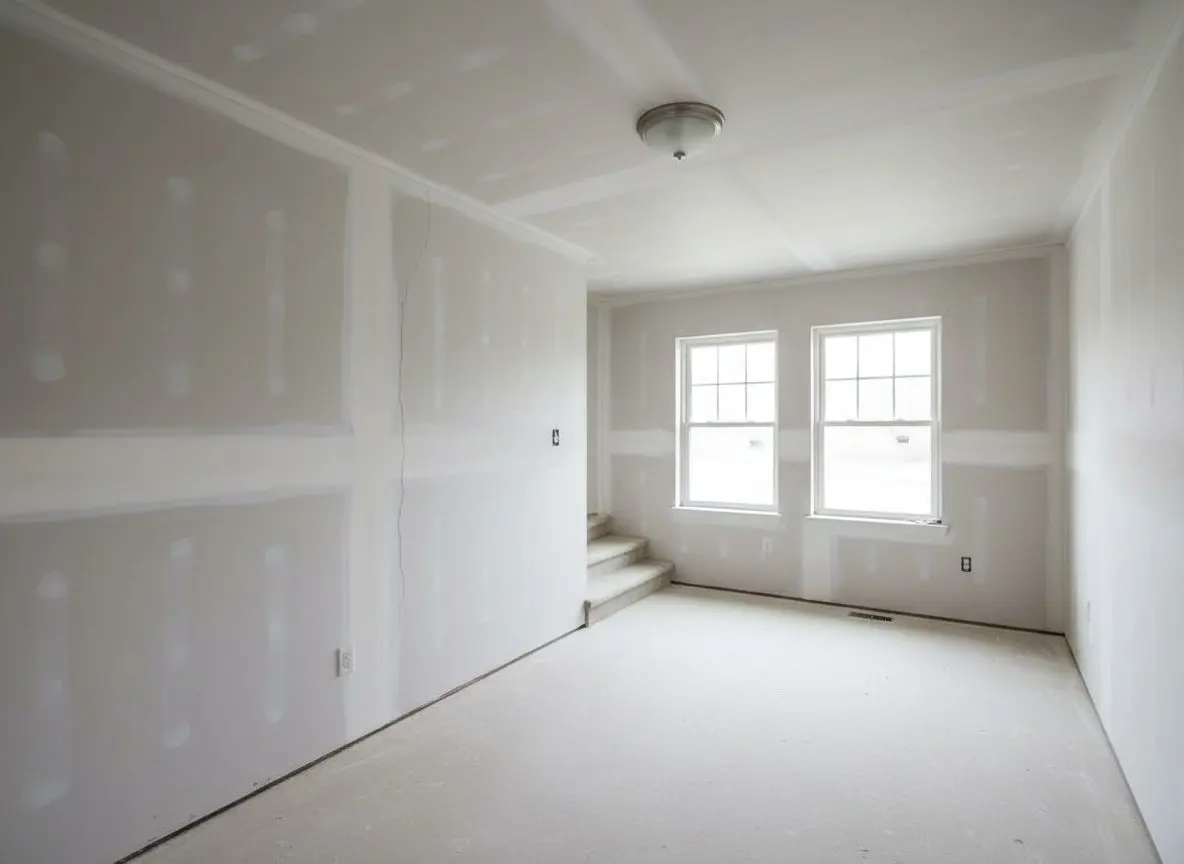
Stair wall crack cut out and taped
Bellevue Park
A crack that had been filled twice before. Cut out to a V, paper-taped, bedded in three coats and feathered eighteen inches either side.
-
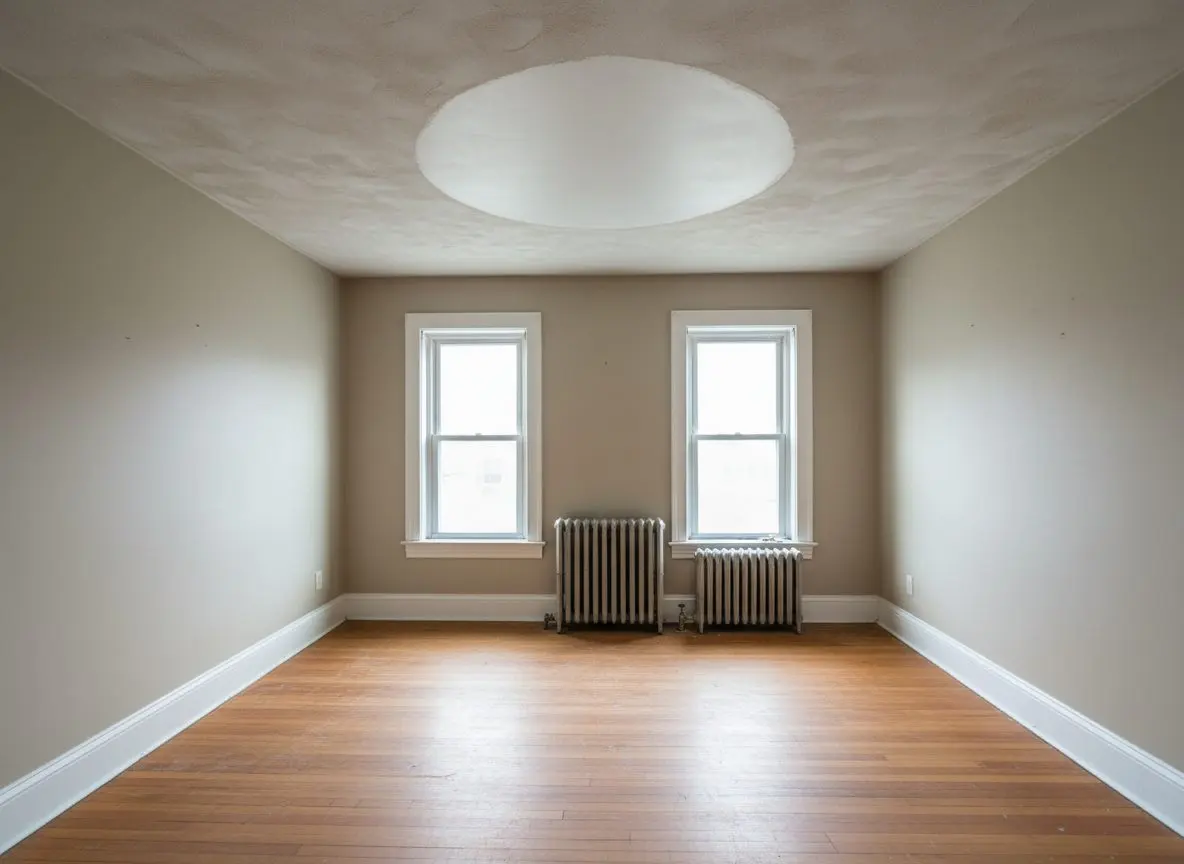
Loose ceiling plaster reattached
Midtown
A front room lid sounding hollow across half its area. Plaster washers into the joists, then skimmed over and matched to the original trowel finish.
-
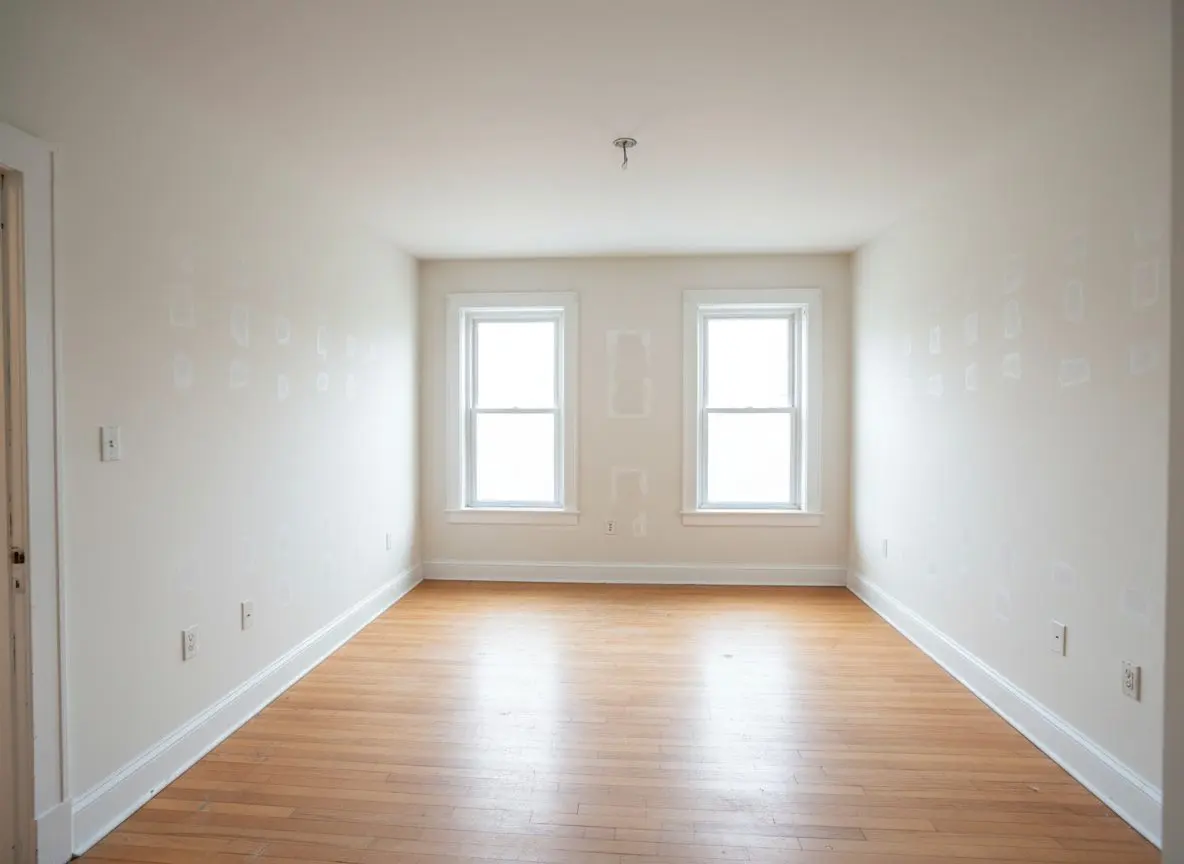
Three apartments patched and primed
Allison Hill
Turnaround work between tenants. Nineteen separate repairs, all cut square and backed, done from a key list in four days.
-
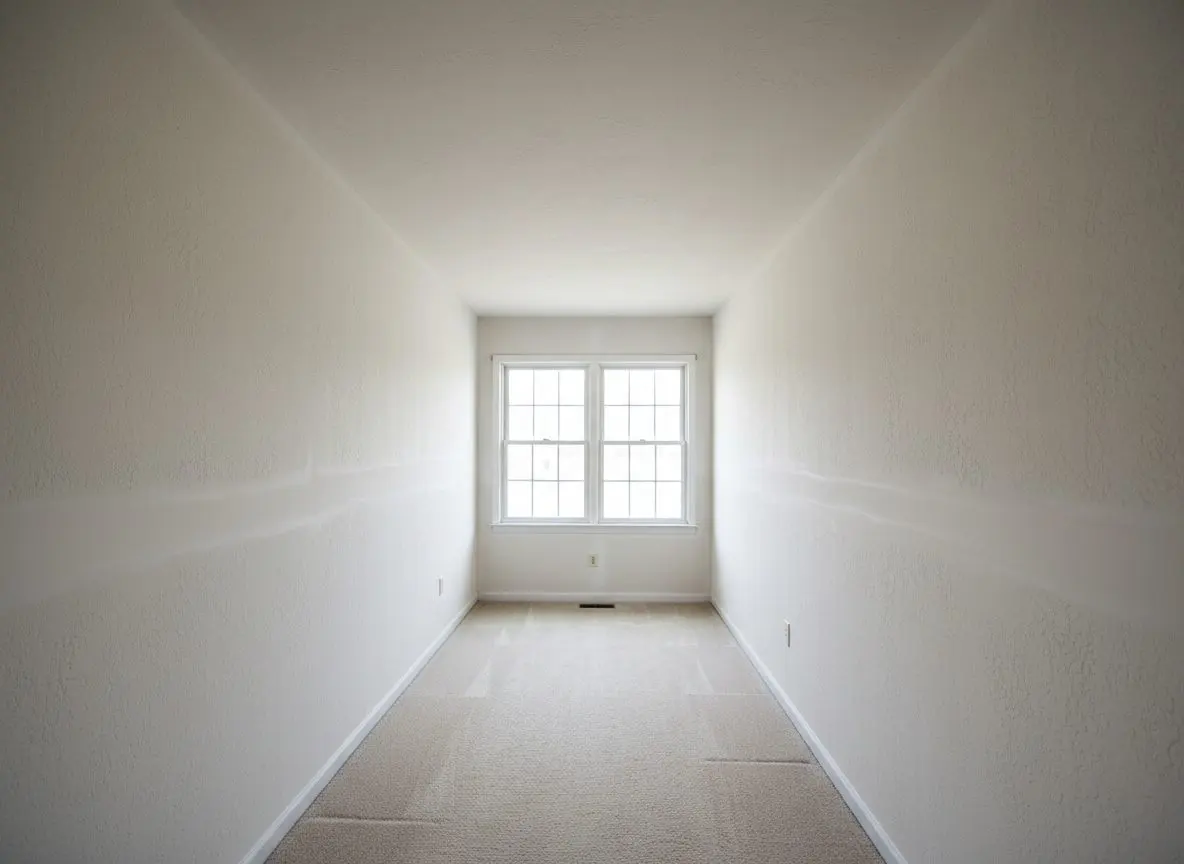
Knockdown texture matched
Linglestown
A hole cut for a leaking valve in a textured hallway. Three sample boards knocked down and compared on the wall before spraying.
-
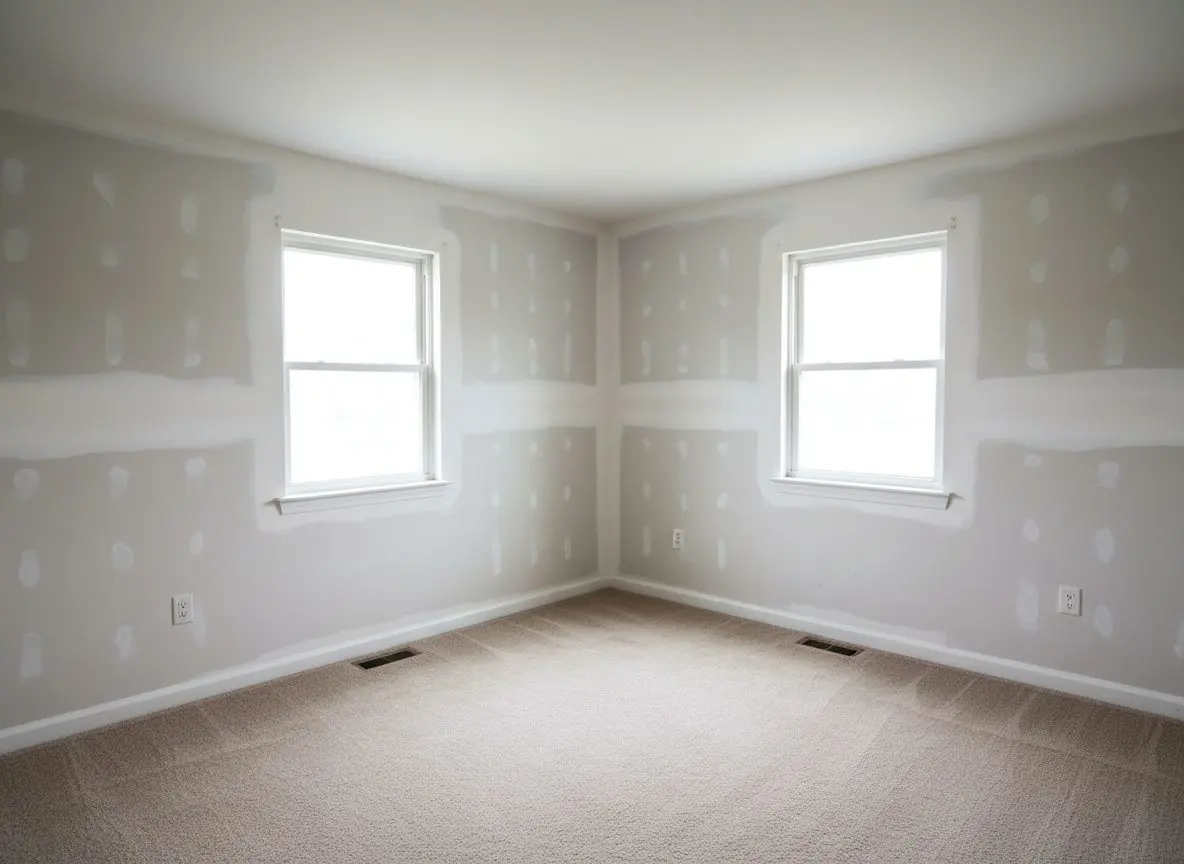
Nail pops fixed across a bedroom
New Cumberland
Around forty pops down two walls after a cold winter. New screws beside each one, old heads driven under, two coats and a full sand.
-
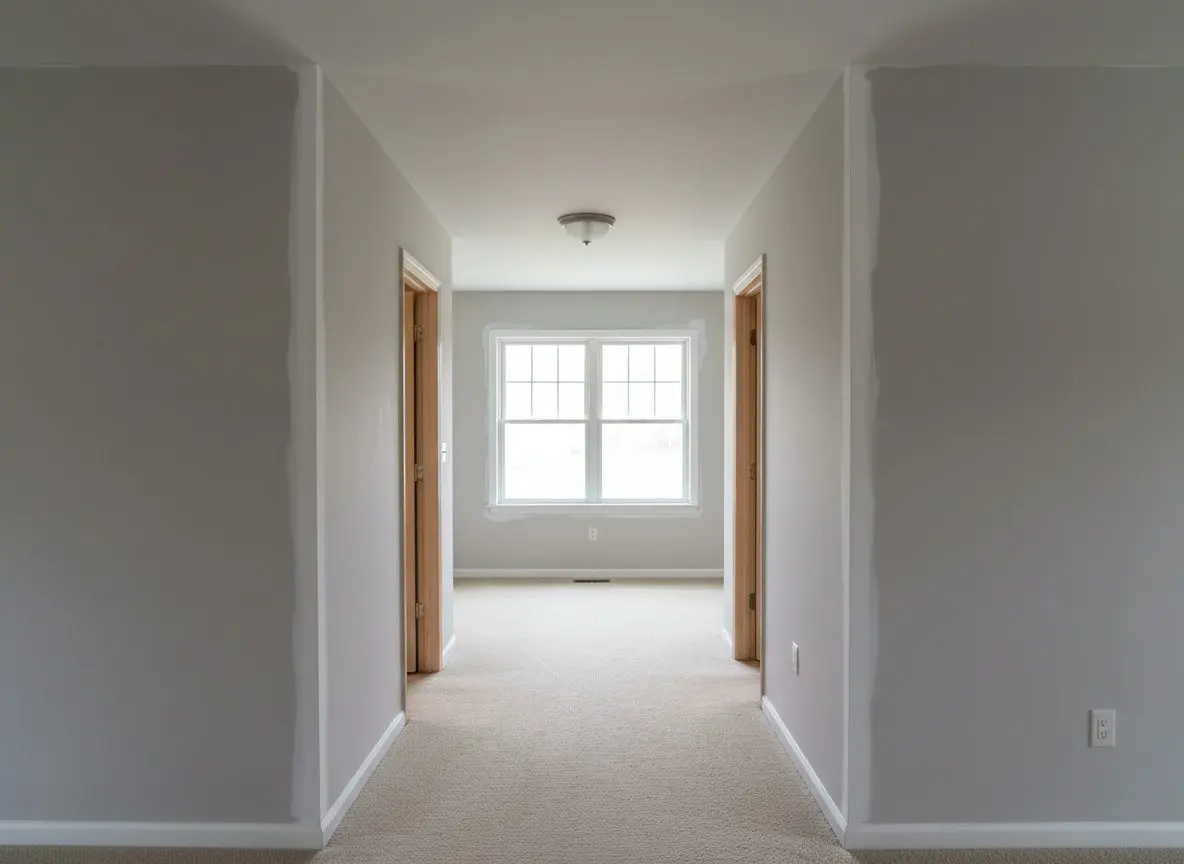
Corner beads replaced in a hallway
Lemoyne
Four external corners crushed by furniture over the years. Old bead cut out, metal bead reset, then coated and feathered onto both faces.
What people said when they could not find it
-
Rated 5 out of 5
Tenant moved out and left four holes and a kicked-in closet door. Patched, matched and primed in a day and a half. I had the keys back on the Thursday.
Warren S. Enola Drywall Repair -
Rated 5 out of 5
A plumber cut a two foot strip out of our kitchen ceiling to reach a leaking supply line and left it open. They hung new board and matched the texture, and I cannot find the line from the table now.
Alanna F. Hummelstown Ceilings -
Rated 5 out of 5
Water came up through the basement floor after the August storm and I thought it was a mop and a fan job. They cut the board back higher than I wanted and ran the fans four extra days. No smell since.
Terri D. Linglestown Water Damage Repair
Call and ask for a couple of addresses near you where we finished a job this year.
Get a free quoteFAQs
Frequently asked questions
Questions people ask about a repair
How small a job will you come out for?
One hole is enough. Plenty of visits are a single doorknob hole or a cracked corner, and they usually take an hour or two spread over two short visits because compound has to dry between coats. If you have several small ones, save them up and we will do them in one go.
Can you match the texture on my walls?
Usually yes, and we prove it on a sample board rather than on your wall. Knockdown and orange peel match well. Hand-troweled plaster from the twenties is harder and sometimes the honest answer is to skim the whole wall, which we will say before you commit to anything.
Why does the same crack keep coming back?
Because it is being filled rather than repaired. A crack over a moving joint needs cutting out, taping and bedding in compound so the tape spans the movement. Filler has nothing holding it across the gap, so it lets go the first time the framing moves.
Do you paint the repair when you are done?
We prime it, which is included. Painting is a separate decision, because matching an existing color rarely works from the leftover can and the honest answer is often to paint out to a corner or a break line. We will tell you which your wall needs.
How long does a patch take from start to finish?
Two short visits over two or three days for most repairs. The board and the first coat go in on day one, then coats have to dry properly before the next, and the sand and prime happen on the last visit. Rushing it is what makes a patch show later.
My ceiling is sagging in one spot. Is that urgent?
Look at it soon. A sag in an old plaster ceiling usually means the keys have broken off the lath over an area much wider than the sag, and those come down as a sheet rather than a crumb. Keep people out from under it and we will sound it and tell you whether it is a section or the whole lid.
What are all these little bumps down my wall?
Popped screws or nails, and they are common in houses that have been through a few winters. The fastener has backed out and pushed the compound off its head. Each one gets a new screw set beside it, the old head driven below the surface, then two coats and a sand. It is a fast job to do a whole wall at once.
Can you repair a wall that has wallpaper on it?
We can, but the patch will not disappear under the old paper. Either the paper comes off the whole wall and the wall is skimmed, or the repair is made and the wall repapered. What we will not do is patch behind paper and let you find out at the end that the seam shows.
There is a hole behind my door handle again. Can you stop that?
Yes. The patch goes in with backing behind it, and a stop gets fitted so the handle cannot reach the wall. Patching the same hole without dealing with the door is how it becomes an annual job, and the stop costs almost nothing next to a fourth repair.
Will you make a mess in the rest of the house?
Sanding is the messy part and it is contained. The room gets sheeted, the doorway gets covered, and we sand with a vacuum attached rather than by hand where the job allows it. Expect a fine film in the room itself, which we vacuum before leaving, and very little beyond it.
Do you handle repairs after a fire or a break-in?
Yes, once the property is safe and anything structural has been signed off. Smoke damage often means the board is sound and the surface is not, which is a skim rather than a rebuild. Insurance work is fine, and we write the quote in the detail an adjuster will want to see.
Can you do several apartments in one week?
Yes, and that is a regular part of the book for landlords and managers. We work from a key and a list, quote per unit, and send photographs at the end of each one rather than expecting somebody to come out and inspect an empty apartment before the next tenant moves in.
Harrisburg Drywall Pros
Flood and burst-pipe damage moves ahead of the ordinary line, no matter what else is booked.
Harrisburg Drywall Pros hangs, tapes, finishes and repairs board across Harrisburg and the river towns nearby, in rowhouses with plaster on lath as often as new construction. Three crews finish around a hundred and ninety jobs a year, and flood or burst-pipe damage is fitted in ahead of the ordinary line. Trading here since 2012.
Why the river towns call Harrisburg Drywall Pros first
- Fourteen years working the river towns, trading since 2012
- We sound the plaster and check the lath before putting a number on anything
- Flood and burst-pipe damage moves ahead of the ordinary line
- Freeze-thaw cracks are taped and bedded, not just filled over
- Nothing is added to the quote later without you agreeing to it first
If the river has left a stain on a lower wall, an old ceiling needs opening up, or a room needs drywall from scratch, call (717) 555-0164 and somebody will come and look at it. The written quote follows the visit, broken down room by room, and nothing gets added to it later without you agreeing first.
Give us a call
office@harrisburgdrywallpros.com
Send us a message
922 N 3rd St, Harrisburg, PA, 17102
Where to find us